
Salmon
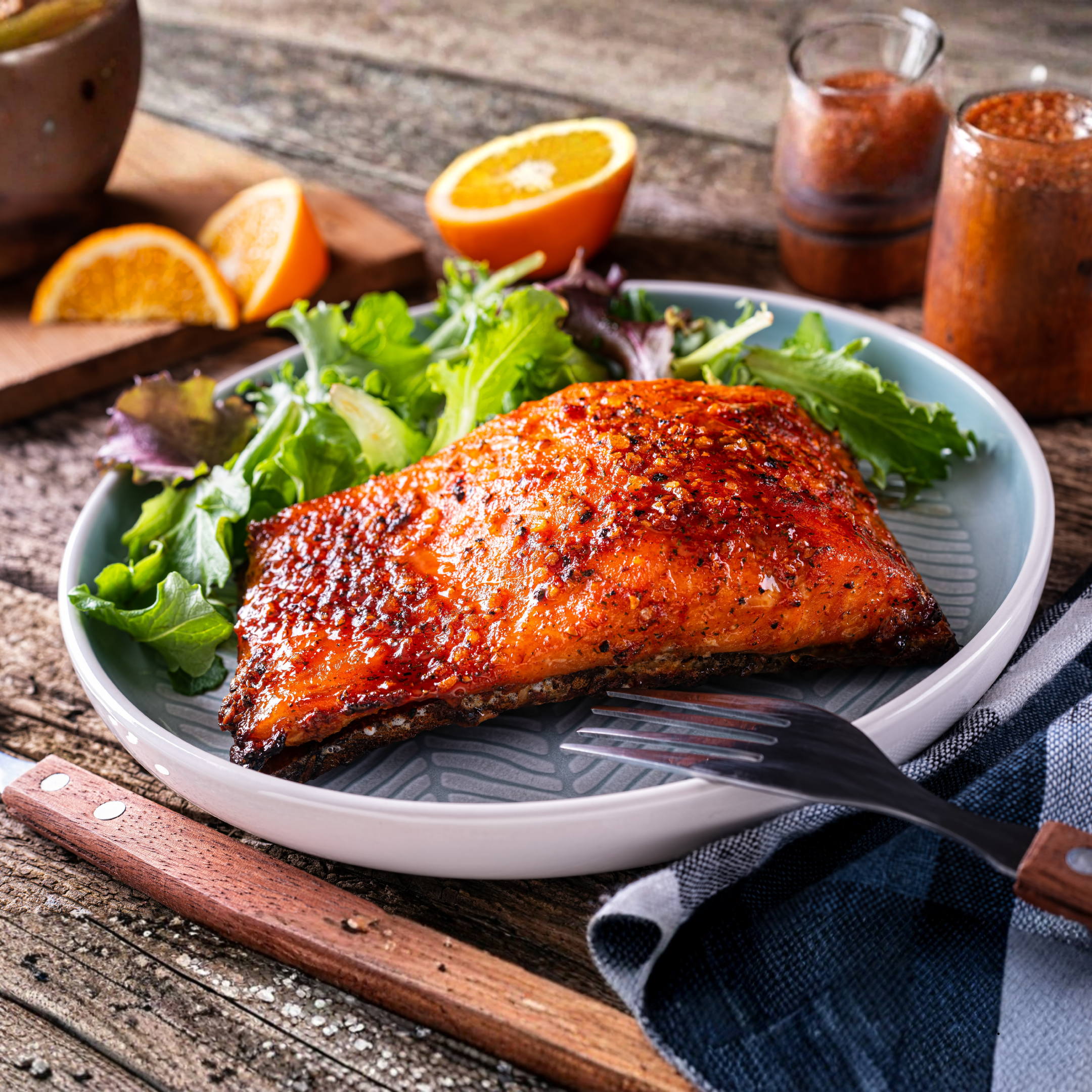
© Fudio via Canva.com
Quick Bite
A type of fish found in both freshwater and saltwater, known for their distinctive life cycle and rich, flavorful meat.
History
The history of Alaskan salmon is deeply tied to the state’s culture, economy, and environment. For thousands of years, Indigenous peoples of Alaska relied on wild salmon as a primary food source, developing sustainable fishing and preservation methods such as drying and smoking.
When Russian and later American settlers arrived, salmon became a major commercial resource. By the late 1800s, canneries were established along Alaska’s coasts, fueling a booming industry but also leading to overfishing.
In 1959, when Alaska became a state, it took control of its fisheries and implemented strict conservation and management practices. Today, Alaska’s salmon fisheries are considered some of the best and most sustainable in the world, preserving both a way of life and a vital natural resource.
Fun Facts
- Alaska is home to five main types of wild salmon: king, sockeye, coho, pink, and chum.
- The rich pink to red hue of salmon meat comes from eating krill and shrimp.
- Those natural pigments are called astaxanthin.
- Some salmon migrate over 2,000 miles from the ocean back to their birthplace in freshwater to spawn.
Where to Try

Recipe
Ingredients
Instructions
- Traditionally, Alaskans cook salmon over an open alder wood fire.
- If using a grill, preheat it to medium heat, about 350°F.
- If possible, add a few chunks of soaked alder or cedar wood to create gentle smoke.
- Rinse the salmon fillets under cold water and pat dry.
- Brush lightly with olive oil or melted butter.
- Sprinkle with coarse sea salt and freshly ground black pepper to taste.
- Place lemon slices and fresh dill over each fillet. The goal is to enhance the salmon’s natural richness, not overpower it.
- Option 1, grill grates: Place the fillets skin-side down directly on the grates. Cook for 10–15 minutes, depending on thickness, until the flesh flakes easily with a fork.
- Option 2, wood plank: Place salmon on a soaked cedar or alder plank and set the plank over indirect heat. Cover and cook for 15–20 minutes until the fish is tender and smoky.
- Serve hot off the grill with fresh lemon wedges.
