
Saimin
© IslandLeigh via Canva.com
Quick Bite
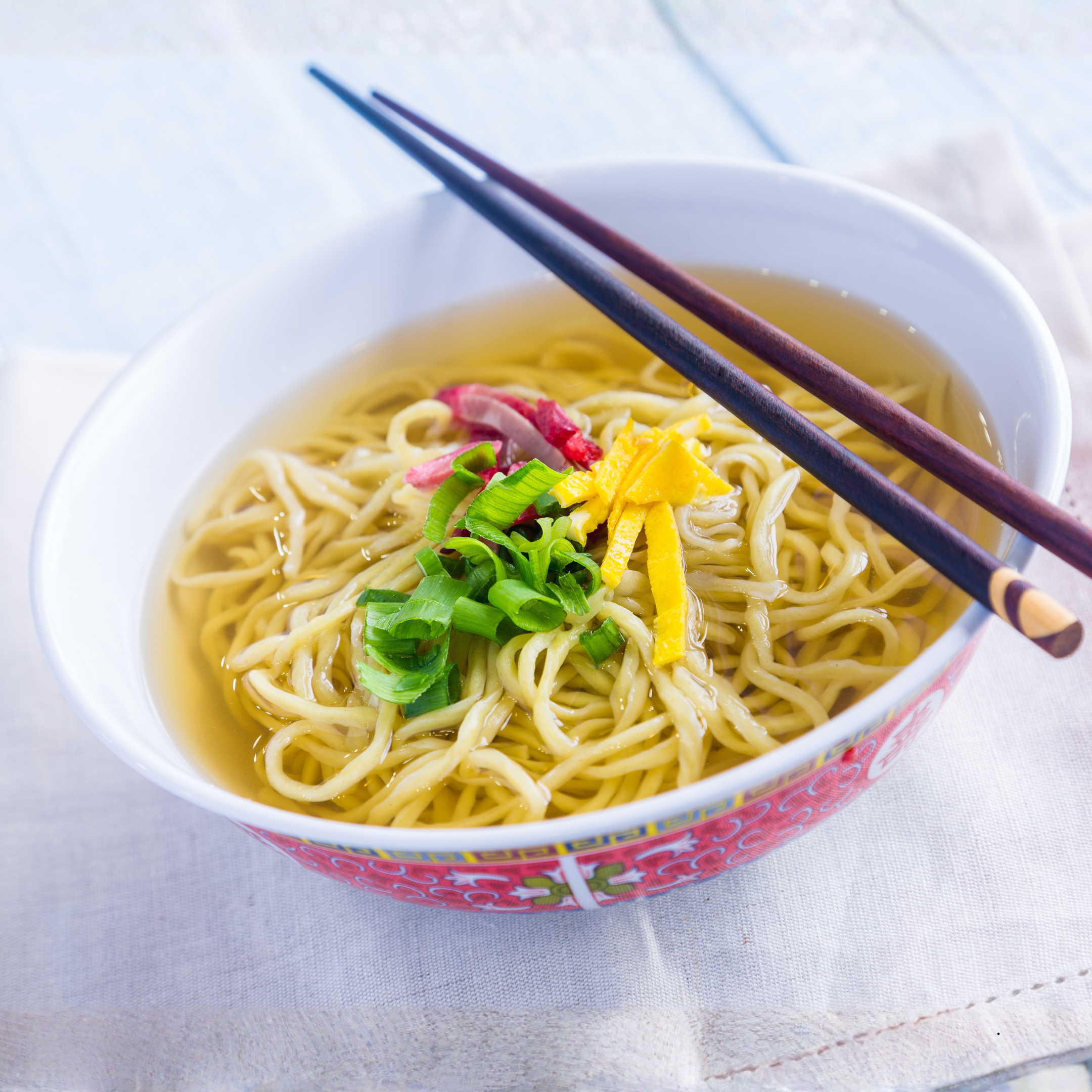
Saimin is Hawaii’s cozy noodle soup made with springy noodles, savory broth, and toppings like char siu, egg, kamaboko, and green onion. It is plantation-era comfort in a bowl.
History
Saimin grew out of Hawaii’s plantation communities in the late 1800s and early 1900s. Workers from China, Japan, Okinawa, the Philippines, Portugal, Korea, and other places brought noodle and soup traditions that mingled over shared meals.
The name is often linked to Chinese words for thin noodles, but the dish itself is pure local Hawaii. It is not exactly ramen, not exactly wonton mein, and not exactly pancit: it is a blend that became its own thing.
Saimin broth is usually lighter than ramen broth, often made with shrimp, bonito, chicken, or pork flavors. The toppings can vary, but kamaboko, char siu, egg, Spam, wontons, and green onions all feel at home.
For many people in Hawaii, saimin is childhood food, rainy-day food, late-night food, and “I need something warm” food. It is humble, but it carries a lot of island history.
Fun Facts
- Saimin is so local that even fast-food chains in Hawaii have served it.
- The noodles are usually softer and lighter than ramen noodles.
- It is one of the clearest examples of Hawaii’s plantation food culture.
Where to Try
A classic old-school saimin counter with deep local roots.
Known for a large menu of saimin variations and local comfort foods.
A beloved Kauai institution famous for saimin and lilikoi chiffon pie.

Recipe
Ingredients
Instructions
- Make the broth: Simmer chicken broth with dried shrimp, soy sauce, ginger, and sugar for 15 minutes.
- Strain: Strain if using dried shrimp.
- Cook the noodles: Cook noodles according to package directions.
- Build the bowls: Divide noodles among bowls.
- Add broth: Ladle hot broth over the noodles.
- Top and serve: Top with char siu or Spam, egg, kamaboko, and green onion.
