
Muktuk
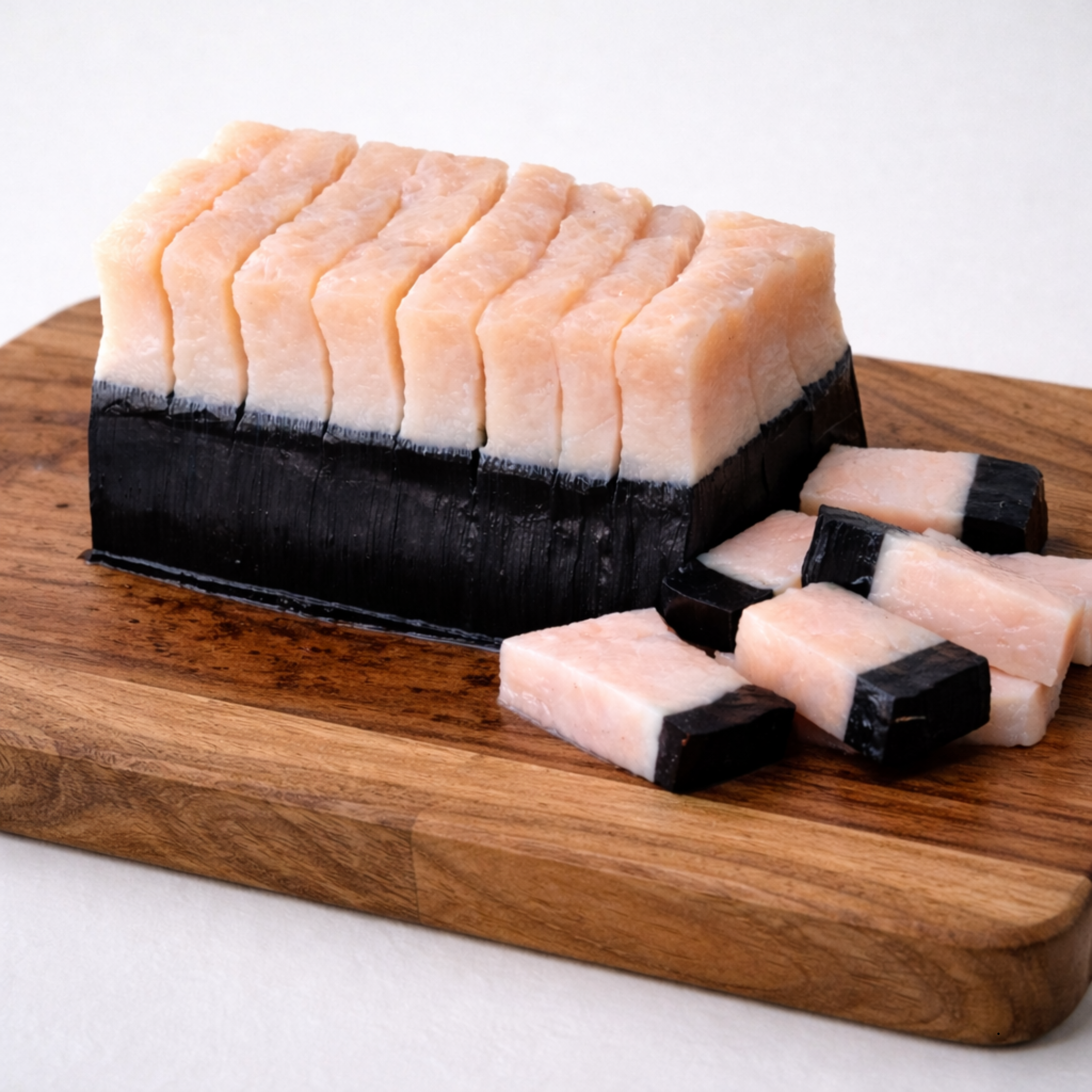
Quick Bite
A traditional Inuit and Indigenous Arctic food made from the skin and blubber of whales, most commonly bowhead, beluga, or narwhal.
History
Muktuk, made from whale skin and blubber, has been a staple food of the Inuit and other Arctic Indigenous peoples for thousands of years. It developed out of necessity in the harsh Arctic climate, where traditional crops couldn’t grow.
The nutrient-rich whale skin provided vital vitamin C, vitamin D, and fat, helping people survive long winters. For centuries, muktuk was harvested during community whaling and shared at feasts, symbolizing respect for nature and community unity.
When European explorers arrived, they learned to eat muktuk to avoid scurvy, recognizing its nutritional value. Today, muktuk remains an important part of Arctic culture and tradition, often served at celebrations and family gatherings as a link to ancestral heritage.
Fun Facts
- Traditionally served raw or frozen in small cubes, some people now enjoy muktuk breaded and fried.
- It may be dipped in soy sauce, mustard, or seal oil.
- Early Arctic explorers learned from Indigenous peoples to eat muktuk during long, cold voyages.
- Muktuk is often served at community feasts, weddings, and festivals in northern Alaska, Canada, and Greenland.
Where to Try

Recipe
Ingredients
Instructions
- Rinse the muktuk thoroughly in cold water to remove any surface debris.
- Cut into bite-sized cubes, about ½ inch thick.
- Serve raw or slightly frozen for the authentic texture: chewy skin with soft, oily blubber.
- Sprinkle lightly with salt, or dip in soy sauce, seal oil, or a touch of hot sauce if desired.
