
Dutch Crunch Bread
© Maryann Zucker via Canva.com
Quick Bite
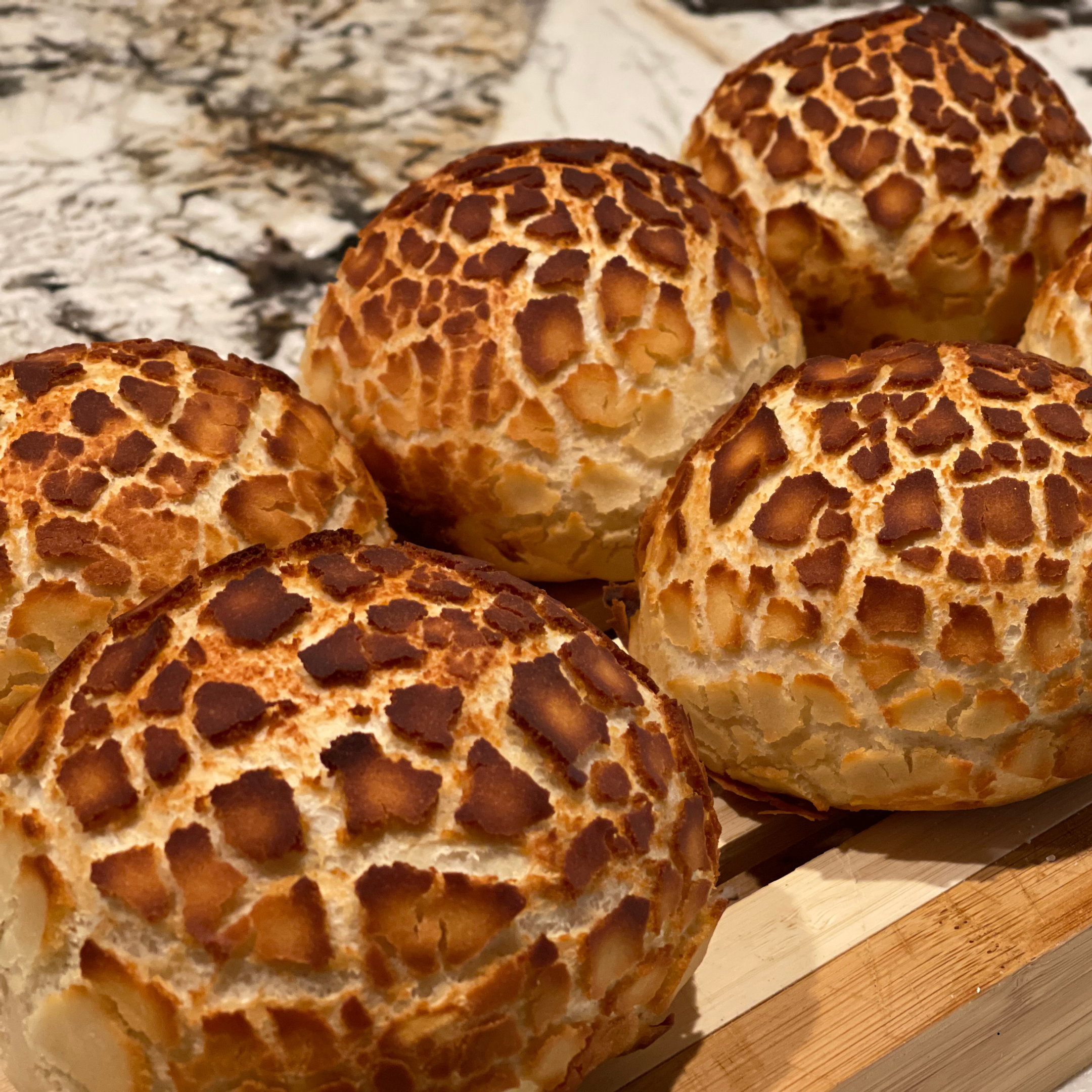
A soft, fluffy sandwich roll topped with a crackly, mottled crust made from a rice-flour paste. It is especially popular in Northern California, where it is a signature option at many sandwich shops.
History
Dutch Crunch bread originated in the Netherlands, where it is traditionally called tijgerbrood, or “tiger bread.” Bakers in the early to mid-20th century began brushing a special paste made from rice flour, sugar, yeast, oil, and water onto loaves before baking.
Because rice flour does not form gluten, the paste dries, tightens, and then cracks dramatically in the oven, creating its signature tiger-like pattern. The technique was valued not just for its striking look but also for the crispy, savory-sweet flavor it added to otherwise simple white loaves.
The bread made its way to the United States later in the 20th century, particularly through Dutch immigrants and artisan bakers experimenting with European styles. It became especially iconic in Northern California, where local bakeries and delis embraced it, rebranding it as Dutch Crunch and using it widely for sandwiches.
By the 1990s and 2000s, it had become a distinct West Coast specialty, so much so that many locals consider it the “official sandwich roll” of the Bay Area. Today, Dutch Crunch, or tiger bread, is known worldwide, but its strongest modern association remains with California sandwich culture.
Fun Facts
- The rice paste’s cracking is random, so every Dutch Crunch loaf has a one-of-a-kind pattern.
- The crispy top helps balance messy, juicy fillings.
- That crunch is one reason it became so beloved in sandwich shops.
- In the United Kingdom, some stores renamed it “giraffe bread.”
- Some people argue the pattern looks more like giraffe spots than tiger stripes.
Where to Try

Recipe
Ingredients
Instructions
- Preheat oven: Preheat oven to 375°F / 190°C.
- Make the dough: In a bowl, mix warm water, sugar, and yeast.
- Let it sit 5–10 minutes until foamy.
- Add oil, salt, and flour.
- Knead by hand or mixer for 8–10 minutes, until smooth and elastic.
- Shape into a ball, place in an oiled bowl, and cover.
- Let rise 1 to 1½ hours, until doubled.
- Shape the rolls: Punch down the dough and divide into 6 equal pieces.
- Shape each into a tight ball or elongated sandwich roll.
- Place on a baking sheet lined with parchment paper. Cover with a towel.
- Let rise again for 20–30 minutes.
- Make the Dutch Crunch topping: Mix rice flour, yeast, sugar, salt, oil, and warm water.
- Stir until it forms a thick, spreadable paste, similar to peanut butter.
- Add more water 1 teaspoon at a time if the paste is too thick.
- Let the topping rest for 15 minutes to activate.
- Apply the topping: Generously spread the paste over each roll’s surface.
- Make sure the entire top is coated. This is what creates the crackle.
- Bake: Bake at 375°F / 190°C for 25–30 minutes.
- The rolls should be golden brown with a crunchy, crackled top.
- Serve: Let cool slightly, then slice for sandwiches.
