
Sourdough Bread
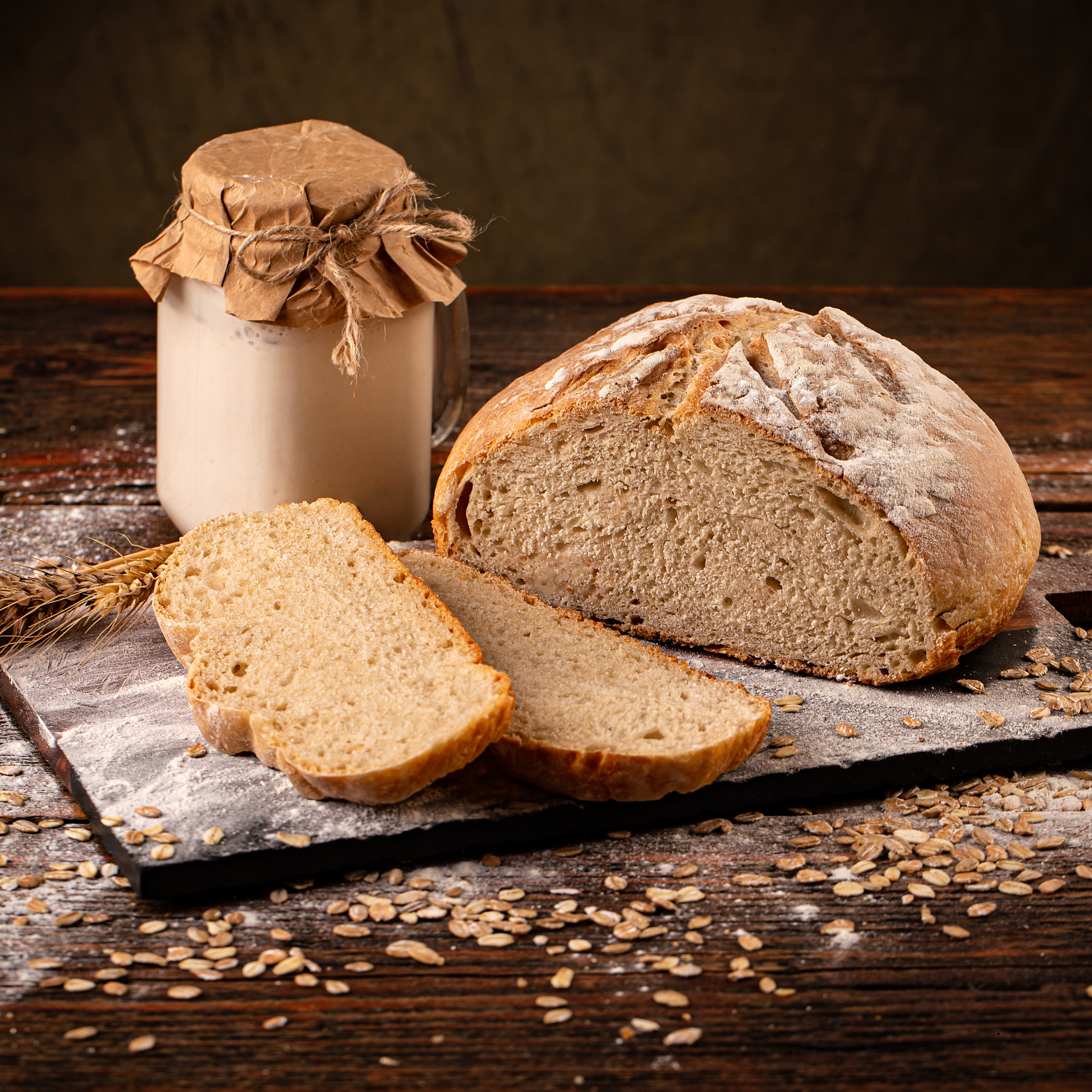
© grafvision via Canva.com
Quick Bite
A type of bread made using a natural fermentation process instead of commercial yeast. The bread rises because of a mixture called a sourdough starter, which contains wild yeast and beneficial bacteria that occur naturally in flour and the air.
History
Sourdough bread is one of the oldest forms of leavened bread, dating back to around 1500 BCE in ancient Egypt. Bakers discovered that a simple mixture of flour and water could naturally ferment when exposed to wild yeast in the air, creating lighter, more flavorful bread than traditional flatbreads.
The method spread through ancient Greece and Rome, where bakers carefully maintained sourdough starters and passed them down for generations. For centuries, this natural fermentation process was the primary way bread was made.
In the United States, sourdough became especially popular during the California Gold Rush, when miners carried starters to bake bread in remote camps. The technique became closely associated with San Francisco, which is still famous for its tangy sourdough loaves.
Although commercial yeast later made bread-making faster, sourdough remains beloved today for its rich flavor and traditional baking roots.
Fun Facts
- Some sourdough starters have been kept alive for over 100 years.
- Starters can be passed down through generations by continuously feeding them flour and water.
- During the California Gold Rush, experienced miners were sometimes nicknamed “sourdoughs.”
- A sourdough starter can be dried, refrigerated, or even mailed to someone.
- Dried starter can later be revived with a little flour and water.
Where to Try

Recipe
Ingredients
Instructions
- Mix the dough: In a large bowl, combine the sourdough starter and warm water. Stir until mostly dissolved.
- Add the flour and salt and mix until a shaggy dough forms.
- Rest the dough: Cover the bowl and let the dough rest for 30–45 minutes. This helps the flour hydrate and improves texture.
- Stretch and fold: Instead of kneading, gently stretch one side of the dough and fold it over itself.
- Rotate the bowl and repeat 3–4 times.
- Do this every 30 minutes for about 2 hours.
- First rise: Cover the dough and let it rise at room temperature for 4–8 hours, until slightly puffy.
- Shape the loaf: Turn the dough onto a lightly floured surface and shape it into a round or oval loaf.
- Place it seam-side up in a floured bowl or proofing basket.
- Second rise: Cover and refrigerate overnight, 8–12 hours. This slow fermentation builds flavor.
- Bake: Preheat the oven to 450°F / 232°C with a Dutch oven inside.
- Carefully place the dough into the hot pot.
- Score the top with a sharp knife.
- Cover and bake for 20 minutes.
- Uncover and bake for another 20–25 minutes, until golden brown.
- Cool: Let the bread cool for at least 1 hour before slicing.
