
Lau Lau
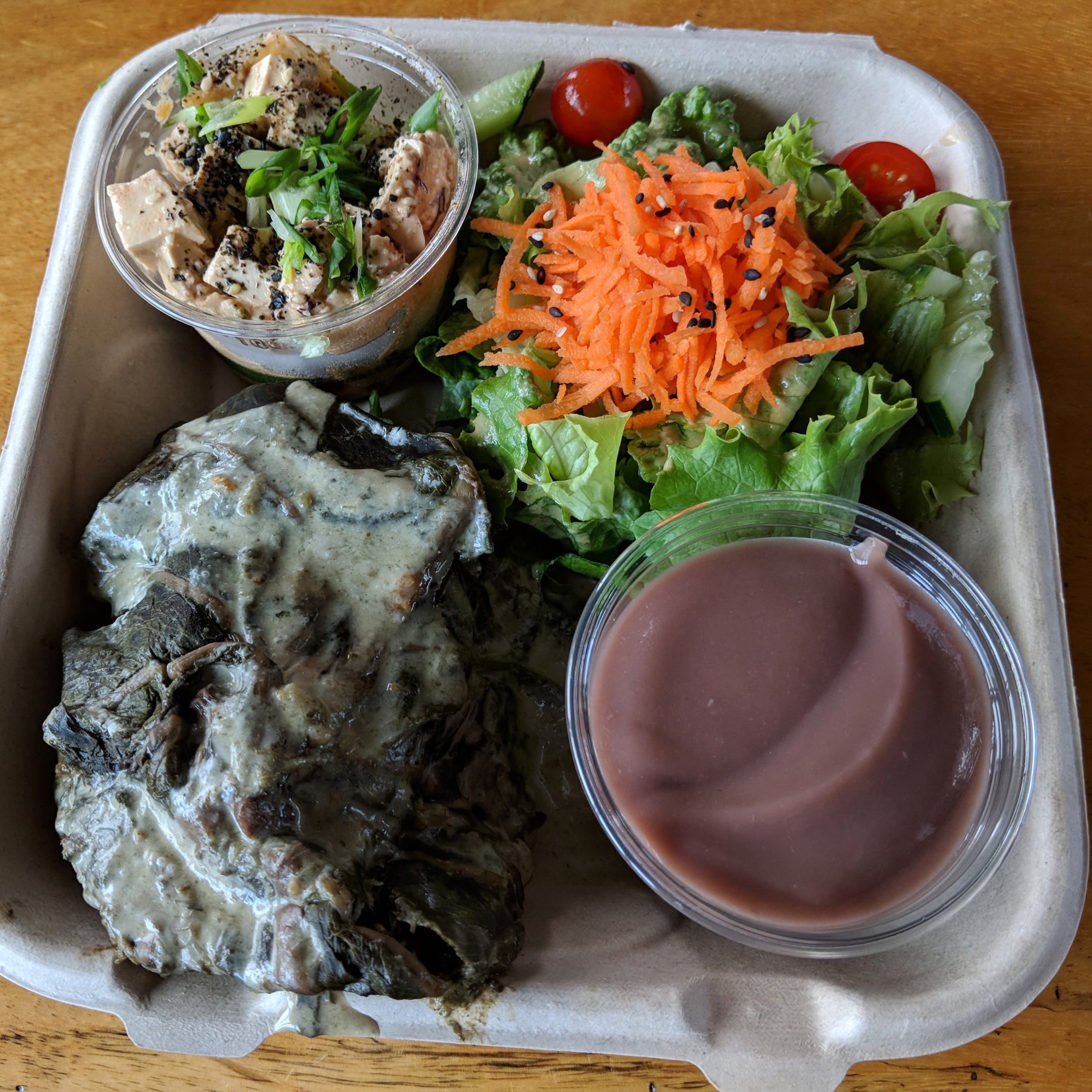
© Eric Broder Van Dyke via Canva.com
Quick Bite
Lau Lau is pork, fish, or chicken wrapped in taro leaves and steamed until tender, earthy, and rich. It is one of Hawaii’s great slow-cooked comfort foods.
History
Lau Lau is a traditional Hawaiian dish with deep roots in Native Hawaiian cooking. Before modern kitchens, food was often wrapped in leaves and cooked in an imu, an underground oven that used hot stones and steam.
The name refers to the wrapping, and the dish traditionally uses luau leaves, which are the leaves of the taro plant. Taro, or kalo, is one of the most important plants in Hawaiian culture, so Lau Lau is more than just a practical cooking method.
Classic Lau Lau often includes pork and salted fish, wrapped first in taro leaves and then in ti leaves. The taro leaves become tender and silky, while the ti leaves protect the bundle and add aroma, though they are not eaten.
Today, Lau Lau is served at Hawaiian restaurants, plate lunch spots, family gatherings, and luaus. It is simple in ingredients but big in feeling: salty meat, soft greens, steam, and patience.
Fun Facts
- The outer ti leaves are used for wrapping and fragrance, but they are not eaten.
- The taro leaves must be cooked thoroughly so they become tender.
- Lau Lau is one of the classic dishes often served with poi, kalua pig, lomi salmon, and haupia.
Where to Try
A classic Hawaiian food stop known for lau lau, pipikaula, kalua pig, and other traditional plates.
A long-running Hawaiian restaurant that serves lau lau and full Hawaiian tasting plates.
A local market known for poke, roast meats, and Hawaiian-style grab-and-go foods.

Recipe
Ingredients
Instructions
- Prepare the leaves: Rinse the taro leaves and remove tough stems.
- Season the pork: Season the pork with salt.
- Build each bundle: Stack 5 or 6 taro leaves for each bundle.
- Place pork and a small piece of salted fish in the center.
- Wrap in taro leaves: Fold the taro leaves around the filling.
- Wrap the outside: Wrap each bundle in ti leaves, then tie with kitchen twine.
- If you do not have ti leaves, wrap tightly in foil.
- Steam: Place bundles in a steamer basket over simmering water.
- Cover and steam for 3–4 hours, until the pork is very tender and the leaves are soft.
- Serve: Unwrap the ti leaves or foil before serving.
